Why reference scans still matter
AI alone isn’t enough. Artificial Intelligence (AI) in volume load scanning is advancing rapidly, offering smart automation and faster insights across quarrying, mining, and civil construction. However, no matter how impressive the algorithms become, one principle remains unchanged.
Jump to Section:
Sign up for updates

AI alone isn’t enough
Artificial Intelligence (AI) in volume load scanning is advancing rapidly, offering smart automation and faster insights across quarrying, mining, and civil construction.
However, no matter how impressive the algorithms become, one principle remains unchanged: accurate measurements always require a verified baseline. A scanner without a trusted reference is like a ruler without markings – it may be impressive technology, but it’s fundamentally incomplete.
Some volume measurement equipment manufacturers promote the idea that their AI-based systems can “learn” truck shapes well enough to reduce or even eliminate reference scans. While it sounds efficient, the reality is far more complex, and not nearly as accurate. Without an anchored baseline, any AI system is vulnerable to gradual drift. What appears precise today can slowly shift off target, turning reliable data into increasingly expensive guesswork.
Why AI without calibration isn’t enough
Artificial intelligence is exceptional at recognising patterns, identifying shapes, and modelling volumetric data. But it cannot maintain accuracy without routine verification, and it can’t be used in a one-size-fits-all fashion to generate accurate.
Over hundreds or thousands of loads, even small deviations become significant, accumulating into considerable amounts of lost product or misreported material. By the time discrepancies surface in invoicing, reconciliation, or stock audit processes, the financial impact has already been locked in.
Loadscan eliminates this risk by using proven, consistent and verified scans that don’t rely on assumptions to build their reference. The Loadscan system uses proven technology to continuously re-anchor itself to real-world conditions, ensuring ongoing volumetric accuracy and dependable reporting.
Reference scans: The Anchor point for real accuracy
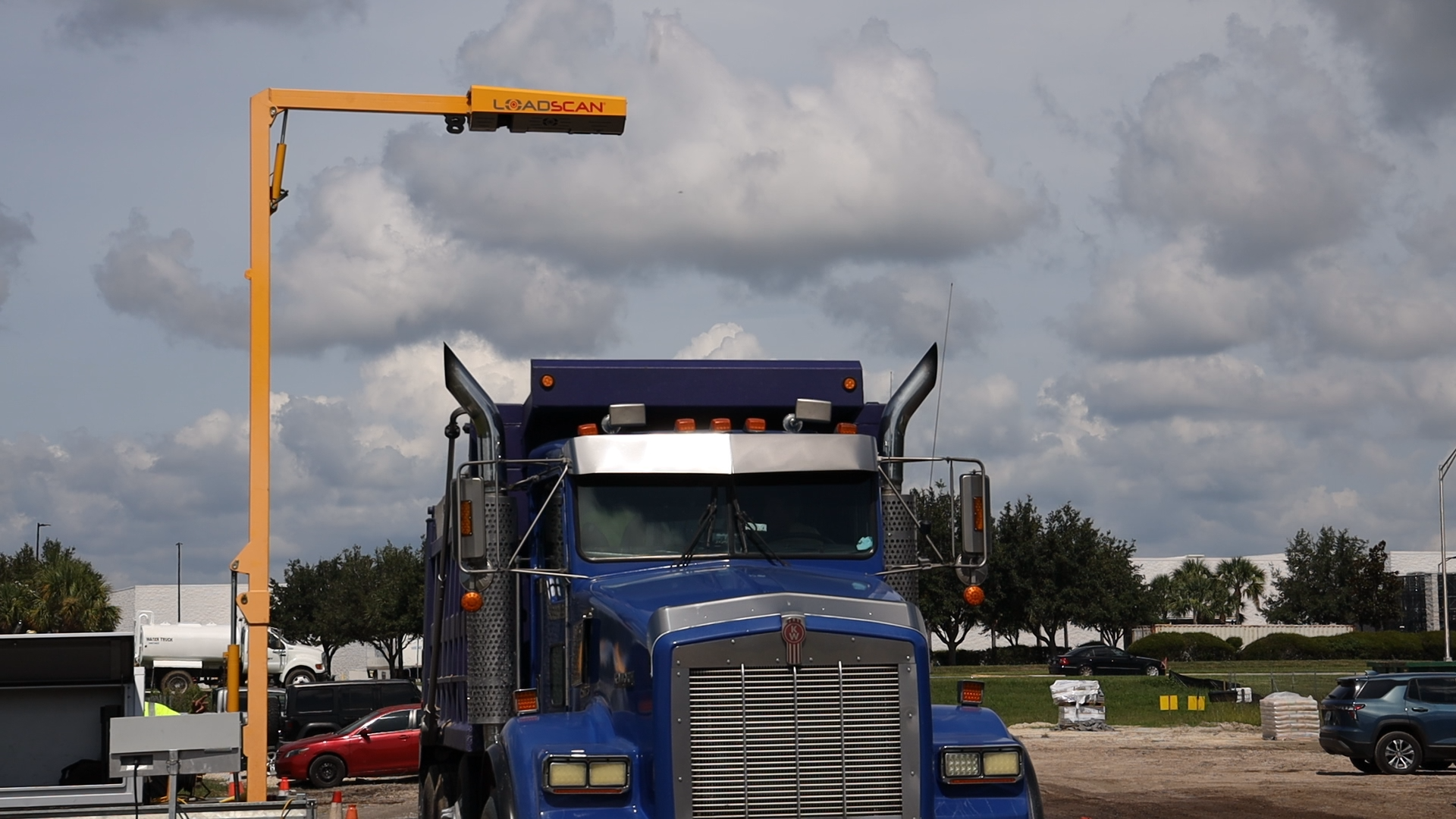
A reference scan functions like the legend on a map – it defines how everything else should be interpreted. As truck bodies change over time through wear, modifications, or accumulated material, only a current reference profile can confirm what is truck and what is payload. Without this baseline, AI cannot reliably distinguish between steel, mud, or load material, opening the door to costly measurement errors.
The hidden costs of reducing reference scans
Some AI-driven systems market the idea of fewer reference scans, promising less downtime and simpler calibration. But the trade-off is increased drift risk. In industries where every cubic metre directly affects contracts, compliance, and profit margins, inaccurate volume reporting is far more expensive than a brief calibration task.
Accuracy isn’t optional
The real question is simple: do you want an approximation, or a measurement you can stand behind? AI in volume load scanning becomes truly powerful only when paired with disciplined calibration and verified reference profiles. Loadscan makes accuracy non-negotiable – because in sectors where material volume drives revenue, certainty isn’t just helpful, it’s essential.
More from this series
- Faster Isn’t Always Better | Volume 1, The Intelligence Series
- The myth of “more is better” | Volume 2, The Intelligence Series
- Why reference scans still matter | Volume 3, The Intelligence Series
- LiDAR: Still setting the standard in load volume measurement | Volume 4, The Intelligence Series
- Heavy-duty vs lightweight: Why Loadscan is built to last | Volume 5, The Intelligence Series
- When “fast” becomes a liability | Volume 6, The Intelligence Series