
When “fast” becomes a liability

True efficiency isn’t found in shaving three seconds off a scan. It’s found in eliminating mistakes, avoiding disputes and knowing the data is right from the moment it’s captured.
Jump to Section:
Sign up for updates

When "fast" becomes a liability
In the race to show off the quickest volumetric load scans, some suppliers have turned speed into a marketing stunt. Slick videos of trucks at speed under scanners, time-lapse clips that look impressive on a homepage, and bold claims about lightning-fast processing all feed the same message: "it's faster, so it must be better."
But that sales pitch collapses the moment you look past the hype.
In volumetric scanning, speed doesn't just compete with accuracy – it can erode it. If trucks are pushed through too quickly, small measurement errors begin to mount up and, although one or two might not raise alarms, production figures can become highly distorted over hundreds of loads. That inaccurate data can skew invoicing and business reporting, which then opens the door to disputes and questions about compliance levels.
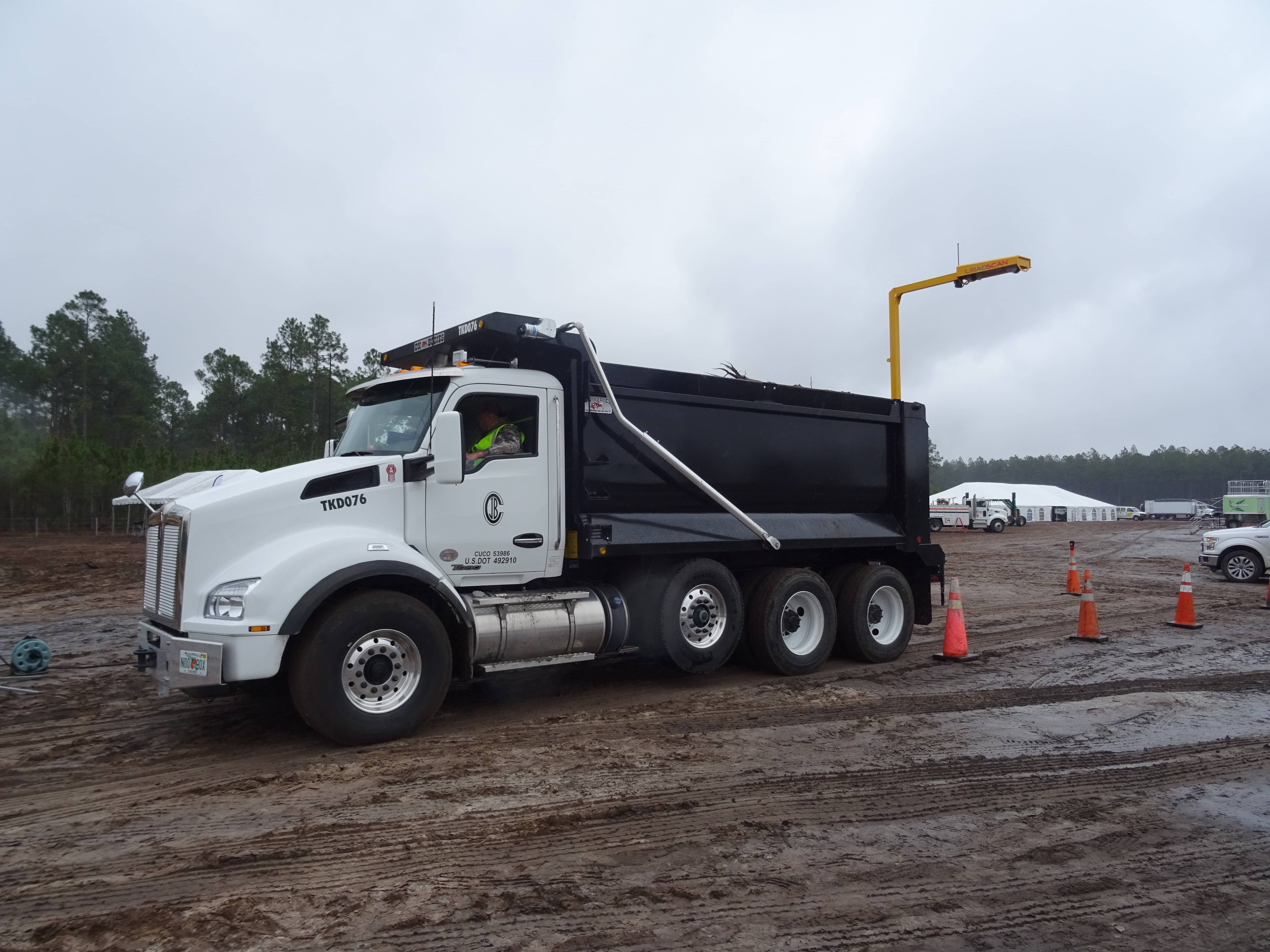
Loadscan won’t trade accuracy for appearances
It's more accurate for trucks to move through the scan area at a steady, controlled pace. This may be slightly slower than typical site speed limit, but that's because accuracy can't be left to chance.
Every scan needs its data points to relate back to the empty reference of the baseline scan, and every measurement must stand up under forensic scrutiny. This is about gathering the scan data accurately so there's truth in the numbers, not about being fast and flashy for a web page or social media post.
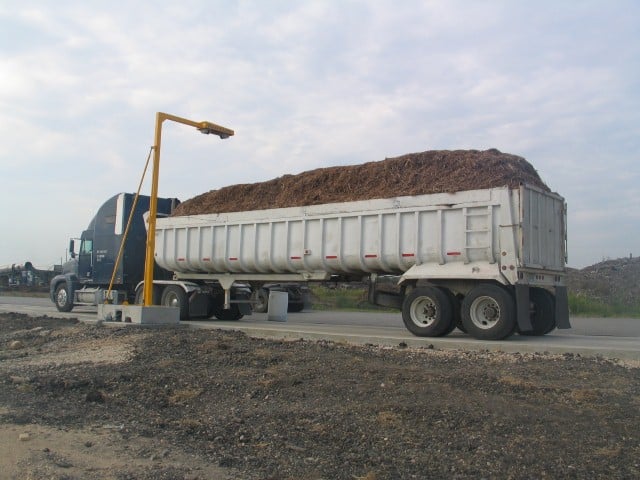
The myth that speed = efficiency
A fast scan feels efficient in theory but, in practice, it can be an expensive illusion.
A quick scan that produces questionable data doesn't save time; it creates rework, write-offs, and lost productivity, as well as disagreements with customers, which risks business relationships that have often taken considerable time to establish.
Construction sites, quarries, pits and large compost producers don't need high-speed theatrics. They need information they can trust with certainty, especially when hundreds of loads can roll through in a single shift.
One inaccurate truck might not matter, but hundreds of them absolutely do.
Why Loadscan chooses accuracy first
Loadscan’s equipment range is engineered for accuracy, but built to perform in the harshest conditions – dust, rain, demanding temperature extremes, uneven lighting and more. But that performance is built on a cornerstone of precision and, when trucks slow slightly as they roll through, the scanner has the ideal window to deliver rock-solid, repeatable accuracy.
That’s how Loadscan maintains its certified +/-1% performance, and that’s why operators worldwide rely on it day in, day out.
The real meaning of efficiency
True efficiency isn't found in shaving three seconds off a scan. It's found in eliminating mistakes, avoiding disputes and knowing the data is right from the moment it's captured, because "fast but wrong" is just wasted time dressed up as progress.
Loadscan stays focused on what actually drives productivity: consistent, verifiable, accurate scans every load, every shift, every day.
More from this series
- Faster Isn’t Always Better | Volume 1, The Intelligence Series
- The myth of “more is better” | Volume 2, The Intelligence Series
- Why reference scans still matter. | Volume 3, The Intelligence Series
- LiDAR: Still setting the standard in load volume measurement. | Volume 4, The intelligence Series
- Heavy-duty vs lightweight: Why Loadscan is built to last. | Volume 5, The Intelligence Series
- When “fast” becomes a liability. | Volume 6, The Intelligence Series
 Why construction sites struggle with accurate truck load volume